Lingo Legend Language Learning
- 4.8
- Rating
- 100.00K
- Installs
- Free
- Price

 Analysis by App-foxy
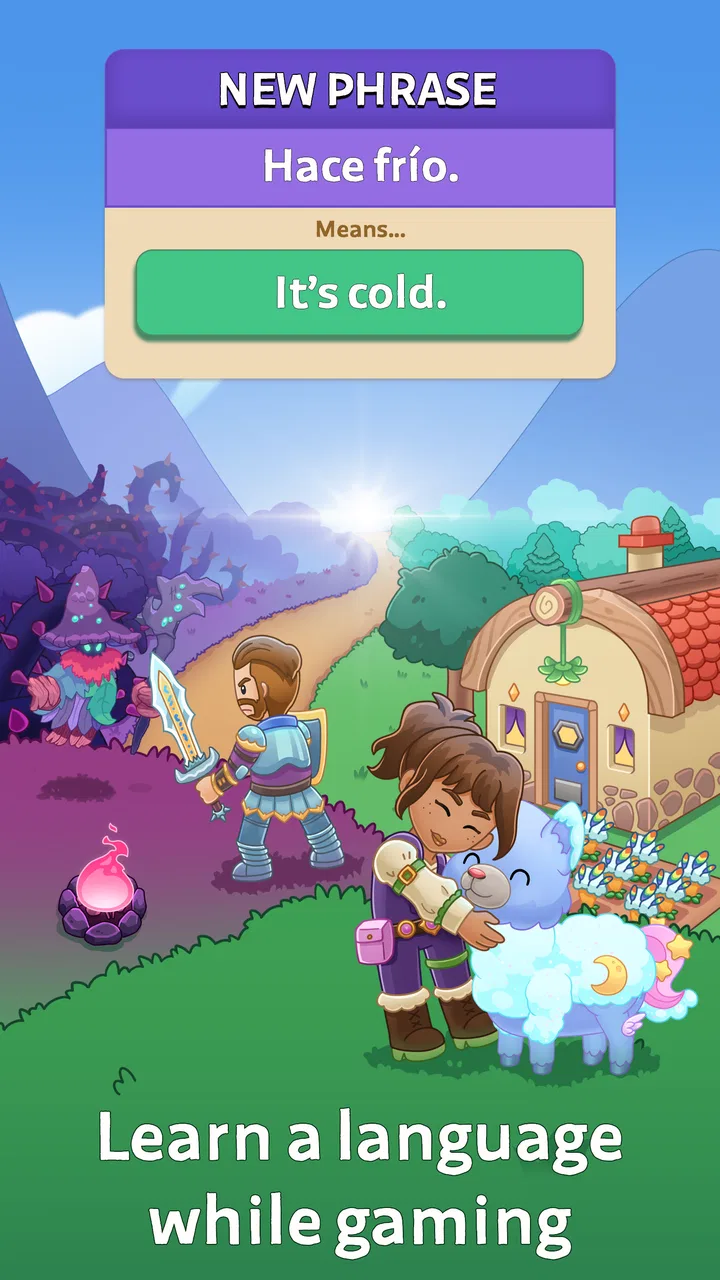
I went into Lingo Legend expecting a light word game with a language-learning theme, but its real appeal is the way it makes practice feel less like opening a textbook. You choose between Spanish, French, Japanese, and Korean games, then work through language-focused challenges while trying to keep your attention on the game itself. That combination makes it easier for me to begin a short session, especially on a day when I would normally postpone studying.
It is a free word game from Hyperthought Games Inc. for players aged Everyone 10+, and it is available on devices running Android 7.1 or later. The game has reached over 100 thousand installs and holds a 4.8 average from around 9.6 thousand ratings, which suggests that its basic idea has connected with a sizeable audience. I would not treat those figures as a substitute for trying it yourself, but they do make it easier to see why this is more than a novelty language app.
How the language-game blend feels in everyday use
The first thing I noticed is that Lingo Legend is most useful when I approach it as a regular practice habit rather than a complete language course. Its game structure gives me a reason to return, while the vocabulary and recognition work give the session some educational purpose. That distinction matters: someone looking for a full curriculum, detailed grammar lessons, speaking assessment, or a carefully sequenced academic program may be happier with a dedicated language platform.
You May Also Like

 Blood Strike: 2.5 Anniversary
Blood Strike’s Loadouts Turn Every Drop Into a Tactical Gamble
A close look at Blood Strike’s custom loadouts: how fast access to signature weapons reshapes its battle royale rhythm, rewards preparation, and narrows the gap between fights.

 Pandora - Music & Podcasts
Pandora’s Music Is Easy to Start, but Harder to Recover
Pandora’s strength is its low-effort path from a seed to a station. Its weak spot is how much confidence it asks you to place in connection, setup, and quiet recovery.

 8 Ball Pool
 Is Built on Rivalries, Rematches, and Routine
A close look at the rivalries, rematches, shared routines, and unanswered safety questions that turn a quick pool match into a persistent mobile community.

 Samsung Music
’s Quiet Strength Is Playing What You Already Own
Its reach comes less from spectacle than from dependable access to a personal library. That simplicity is both the app’s strongest retention engine and its ceiling.

 AccuWeather: Weather Radar
AccuWeather Review: A Quick, Clear Forecast for Everyday Decisions
For everyday plans, the best forecast is the one you can understand quickly. AccuWeather makes rain timing, radar, and local conditions easy to act on, with a few trade-offs.

 Hill Climb Racing
Why Hill Climb Racing Still Turns Crashes Into One More Run
A tiny car, a bumpy hill and one more upgrade: Hill Climb Racing keeps resurfacing because its simple chaos makes every near-miss feel personal.
More From Our News Desk



For casual learners, however, the format is inviting. I can play during a short break, while waiting for an appointment, or at the end of the evening when I have enough concentration for a game but not enough patience for a formal lesson. The word-game format also reduces the emotional weight of making mistakes. I am more willing to test an unfamiliar answer when the activity feels like play instead of an exam.
The four language choices give the app a useful range. Spanish and French are obvious starting points for many English-speaking learners, while Japanese and Korean make the app more appealing to people who want exposure to writing systems and vocabulary that feel less familiar. I would still choose the language based on a clear personal goal rather than switching constantly. Moving between several languages may be entertaining, but it can also split attention and make progress harder to notice.
One practical approach is to pick a single language for a few weeks and use each session for a specific purpose. I might play when I want to reinforce recognition, then write down a handful of words that repeatedly slow me down. The game is better at creating repeated contact than at replacing deliberate review, so a small notebook or phone note can turn a pleasant session into a more durable routine.
What makes the progression motivating
Traditional flashcard apps often ask me to supply motivation before I begin. Lingo Legend works in the opposite direction: the game provides an immediate activity, and the language practice is built into it. That is a meaningful advantage for beginners who find blank vocabulary lists intimidating. I do not have to invent a study plan before starting; I can simply enter a session and respond to what appears.
The trade-off is that game progress can become the main goal. I may start concentrating on getting through challenges quickly rather than noticing why an answer is correct. When that happens, I slow down and treat unfamiliar words as the important part of the session. Replaying a difficult section with attention is more valuable than rushing onward just to see new content.
A useful habit is to separate “play mode” from “study mode.” In play mode, I accept that the session is mainly entertainment with language exposure. In study mode, I pause after a mistake, read the word carefully, and try to recall it again later without immediately relying on the previous answer. This small change prevents the game loop from turning into automatic tapping.
I also find that the app suits learners who need low-friction repetition. If I have ten minutes, I can still do something useful. That is different from a course that expects a longer lesson or a fixed sequence. Short sessions are not automatically shallow, but they require consistency. The game can make returning easier; it cannot create long-term memory without repeated contact over time.
Where pressure can help and where it can get in the way
Games naturally introduce pressure through goals, mistakes, and the desire to continue. A little pressure keeps me alert and stops the activity from feeling like passive scrolling. Too much focus on winning, though, can make me guess rather than learn. For a language beginner, guessing may be unavoidable at first, but it should lead to reflection instead of becoming the entire strategy.
This is especially important when studying Japanese or Korean. A learner may be dealing with unfamiliar scripts as well as new vocabulary, so speed is not always a fair measure of understanding. I would give myself permission to move slowly and repeat material. The game is more enjoyable when I treat progress as gradual exposure rather than demanding immediate mastery.
For younger players, the Everyone 10+ rating is a useful guide for families deciding whether the tone and content are suitable. Adults can also use the rating as a reminder that this is designed as an accessible game, not a specialist classroom tool. Parents who want measurable school-style progress should still observe how the child is using it and pair it with reading, listening, or teacher-guided practice when needed.
Another realistic scenario is a commuter who wants to study but cannot reliably complete a long lesson. A short game session can fit before boarding, during a quiet part of the journey, or while waiting for a friend. I would avoid using it when I need hands-free listening practice or speaking correction, because a word game cannot serve every learning purpose equally well. Its strength is active recognition inside a playful loop.
Spending, value, and the fairness question
The game is free to start, but it includes in-app purchases ranging from $4.99 to $149.99 per item. That is the part I would examine most carefully before spending. The range tells me that optional purchases can vary substantially in size, but it does not by itself tell me which purchase is necessary, how long it lasts, or whether it changes access to language content. I would therefore play the free version first and decide whether the core experience already fits my routine.
From a fairness perspective, I separate educational usefulness from spending pressure. If I can practice comfortably without paying, the free entry point is valuable. If progress feels artificially uncomfortable unless I buy something, that would change my opinion. I would not assume either situation without seeing the purchase prompts in my own version, because the presence of in-app purchases does not explain their exact role.
My advice is simple: do not buy immediately just because the game is enjoyable during the first session. Use it long enough to learn whether you genuinely return to it. A purchase makes more sense when the app has already become part of your routine and the item clearly solves a problem you actually have. It makes less sense as an impulse purchase made to speed through content before you know whether the learning style suits you.
The broad price range also means families should use device-level purchase protections and discuss spending before handing the game to a child. That is ordinary good practice for any free-to-start game, but it matters more here because the app can look educational and therefore feel automatically trustworthy. Educational value does not remove the need to check what a purchase does before confirming it.
Can spending create a competitive advantage?
I would not describe Lingo Legend as a competitive multiplayer game based on the information available about its format. My experience is better understood as personal progress: I am competing with my own memory, attention, and willingness to return. That makes the fairness question different from a battle game where a paying player might gain an advantage over another person.
In this setting, the important comparison is between a learner who pays and one who does not. A fair design would allow both to gain meaningful language practice, even if optional purchases add convenience or extra content. I would judge that by whether the free route remains useful over time, not by the existence of a premium option alone.
There is also a subtler form of competition: competing against the game’s pace. If paid options let someone skip repetition, that may make progress look faster without making learning stronger. I would rather repeat a word until it feels familiar than rush through a larger amount of material. For language learning, visible advancement and actual retention are related but not identical.
That is why I would not use leaderboards, streaks, or completion goals as my only measure of success, even if the game encourages those habits. My personal test is whether I can recognize or recall more words later without the game prompting me. If the answer is yes, the game is doing useful work. If I only remember the sequence of actions inside the app, I need to change how I play or add another learning resource.
How it compares with ordinary language apps and word games
Compared with a standard flashcard app, Lingo Legend is more welcoming when motivation is the main obstacle. Flashcards are efficient and easy to customize, but they can feel repetitive before a habit has formed. This game gives repetition a setting and a sense of movement. The cost is that the learning path may feel less transparent to someone who wants to know exactly which grammar topic or vocabulary level comes next.
Compared with a conventional word puzzle, it offers a clearer reason to engage with unfamiliar language. A normal puzzle may improve general word awareness, but it is not necessarily designed around learning Spanish, French, Japanese, or Korean. Here, the language choice is central to the experience. Still, players who mainly want clever English puzzles may find a dedicated word-game collection more satisfying.
Compared with a structured course, this is the more relaxed choice. I would recommend it to someone who wants a bridge between entertainment and study, especially if formal lessons keep getting abandoned. I would not make it my only tool for an exam, a job requiring accurate communication, or a goal that depends heavily on conversation. Those situations call for listening, speaking, grammar, and feedback beyond what a game-centered format can provide.
The best combination is often complementary. I can use the game to keep daily contact with a language, then use graded reading, audio, conversation practice, or a reference grammar for the areas that need depth. That is not a criticism of Lingo Legend; it is a realistic recognition that one app rarely handles every part of language learning equally well.
Small strategies that make the app more useful
My first tip is to keep the interface language and the target language relationship consistent. If I change settings or learning choices frequently, I create extra mental noise. Staying with one target language makes recurring words easier to notice and gives me a better sense of whether I am improving.
My second tip is to treat mistakes as a review queue. Instead of trying to erase them by immediately replaying the same challenge, I write down the difficult word, say it aloud if possible, and return to it later. Delaying the recall makes the exercise harder, but that extra effort is often more informative than recognizing the answer seconds after seeing it.
My third tip is to stop before fatigue turns the game into random guessing. A short, attentive session is more useful than a long session where I tap through everything. This is particularly important for beginners working with Japanese or Korean, where unfamiliar forms can require more concentration than a quick word puzzle suggests.
My fourth tip is to use the game as a transition into a broader routine. After playing, I might read a very short piece of beginner material or listen to a few target-language phrases. The game supplies momentum; the follow-up activity checks whether the words are becoming useful outside its own environment. That is the point at which entertainment starts becoming practical learning.
What I would want to know before committing
The free starting point makes testing straightforward, but I would still answer a few personal questions before investing serious time. Do I enjoy learning through game actions rather than explicit lessons? Am I willing to repeat material instead of chasing rapid progress? Do I need speaking feedback or a formal curriculum? If the answer to the last question is yes, this should be a supplement rather than the main app.
I would also decide how I feel about optional spending before playing for long. The listed purchase range reaches from $4.99 to $149.99 per item, so I would not let a child or another family member make purchases casually. I would inspect each offer in context, consider whether the free experience is already sufficient, and avoid assuming that the most expensive option is the best educational value.
Another practical question is device compatibility. The minimum operating system is Android 7.1, so owners of older devices should check that their phone or tablet meets that requirement before planning around the game. For supported devices, the relatively modest entry barrier makes it accessible to people who do not have a new handset.
The current version is 141, which tells me the game has an established update history rather than being a brand-new experiment. I still judge updates by how the app feels in daily use, not simply by the version number. A mature product can be reassuring, but it does not guarantee that its learning approach will match every learner.
My trust verdict after weighing the trade-offs
I trust Lingo Legend most as a motivating practice companion. Its strongest quality is not that it turns a game into a complete language education, but that it gives reluctant learners a reason to return. The choice of Spanish, French, Japanese, and Korean makes the concept flexible, and the word-game format is a good fit for short sessions that would otherwise disappear from the day.
I am less enthusiastic about treating it as a stand-alone path to fluency. The playful structure can encourage guessing, and any learner who needs grammar explanations, natural conversation, pronunciation feedback, or a carefully measured syllabus will need additional resources. That limitation is important because a fun app can create the feeling of progress even when the learner is not practicing every skill required in real life.
The spending model also deserves a measured approach. It is free to download and play, but the in-app purchase range is wide enough that I would test the free experience first and review every offer before paying. I do not see a reason to spend simply to validate the app. If it helps me return consistently and a purchase clearly improves the experience I already value, then spending may be reasonable; otherwise, the free route is the safer starting point.
Overall, I would recommend it to a friend who wants language practice to feel approachable, especially someone who keeps abandoning flashcards or formal lessons. I would suggest skipping it as a primary tool if the goal is exam preparation, professional communication, or rapid speaking development. For the right learner, it is a friendly doorway into regular practice. The key is to enjoy the game without mistaking game progress for the whole language-learning journey.
FAQs for Lingo Legend Language Learning
01What is Lingo Legend Language Learning and how does it work?
Lingo Legend Language Learning is an innovative app designed to make language learning fun and engaging through interactive gameplay. Users embark on quests and challenges while learning vocabulary, grammar, and pronunciation. The app uses gamification techniques to enhance retention and motivation, allowing users to progress at their own pace.
02On which platforms is Lingo Legend available?
Lingo Legend is available for both Android and iOS devices. Users can download the app from the Google Play Store or the Apple App Store. The app is optimized for a seamless experience on smartphones and tablets, ensuring flexibility in learning on the go.
03Does Lingo Legend require an internet connection to use?
While some features of Lingo Legend require an internet connection, such as downloading new content and syncing progress, the app also offers offline capabilities. Users can access previously downloaded lessons and games without a connection, making it convenient for learning without internet access.
04Is Lingo Legend suitable for all language proficiency levels?
Yes, Lingo Legend caters to all proficiency levels, from beginners to advanced learners. The app customizes lessons based on the user's current level and learning goals. It provides a personalized learning path, ensuring that content is relevant and challenging according to each user's needs.
05Are there any in-app purchases or subscriptions in Lingo Legend?
Lingo Legend offers both free and premium content. While the basic features are available for free, users can opt for in-app purchases or a subscription to unlock additional content, such as advanced lessons and exclusive challenges. This model allows flexibility in accessing enhanced learning materials.
Pros
- Engaging game mechanics enhance learning.
- Wide variety of languages available.
- Interactive challenges boost retention.
- Frequent updates with new content.
- Offline mode supports learning anywhere.
Cons
- Limited support for lesser-known languages.
- In-app purchases can be pricey.
- Occasional lag on older devices.
- Requires account creation to start.
- Ads may interrupt gameplay flow.

Lingo Legend Language Learning
Gallery